
Walls That Keep Businesses Running Smoothly
Ceiling Drywall Repair in El Paso for cracks, holes, sagging sections, and minor water damage affecting appearance
Ceiling damage shows up as visible cracks along seams, nail pops that create small bumps or dimples, sagging sections that form concave depressions, or staining from minor leaks that discolors texture without causing structural failure. Premier Home Updates repairs these issues by removing compromised material, reinforcing the underlying structure, and matching existing textures so repairs blend invisibly into surrounding surfaces. Ceiling repairs are more complex than wall work because gravity pulls wet mud downward during application, textures must be applied overhead without drips or runs, and lighting angles make even slight imperfections obvious.
The repair process addresses what caused the damage in the first place—sagging results from inadequate fastener spacing or moisture-weakened drywall, cracks develop at seams when joint tape fails or framing shifts, and holes appear from impact or removed fixtures. Each repair involves cutting back to solid material, adding backing support where needed, and applying joint compound in multiple thin coats that dry flat without shrinkage cracks.
Request a detailed estimate after a visual inspection of your ceiling's current condition.
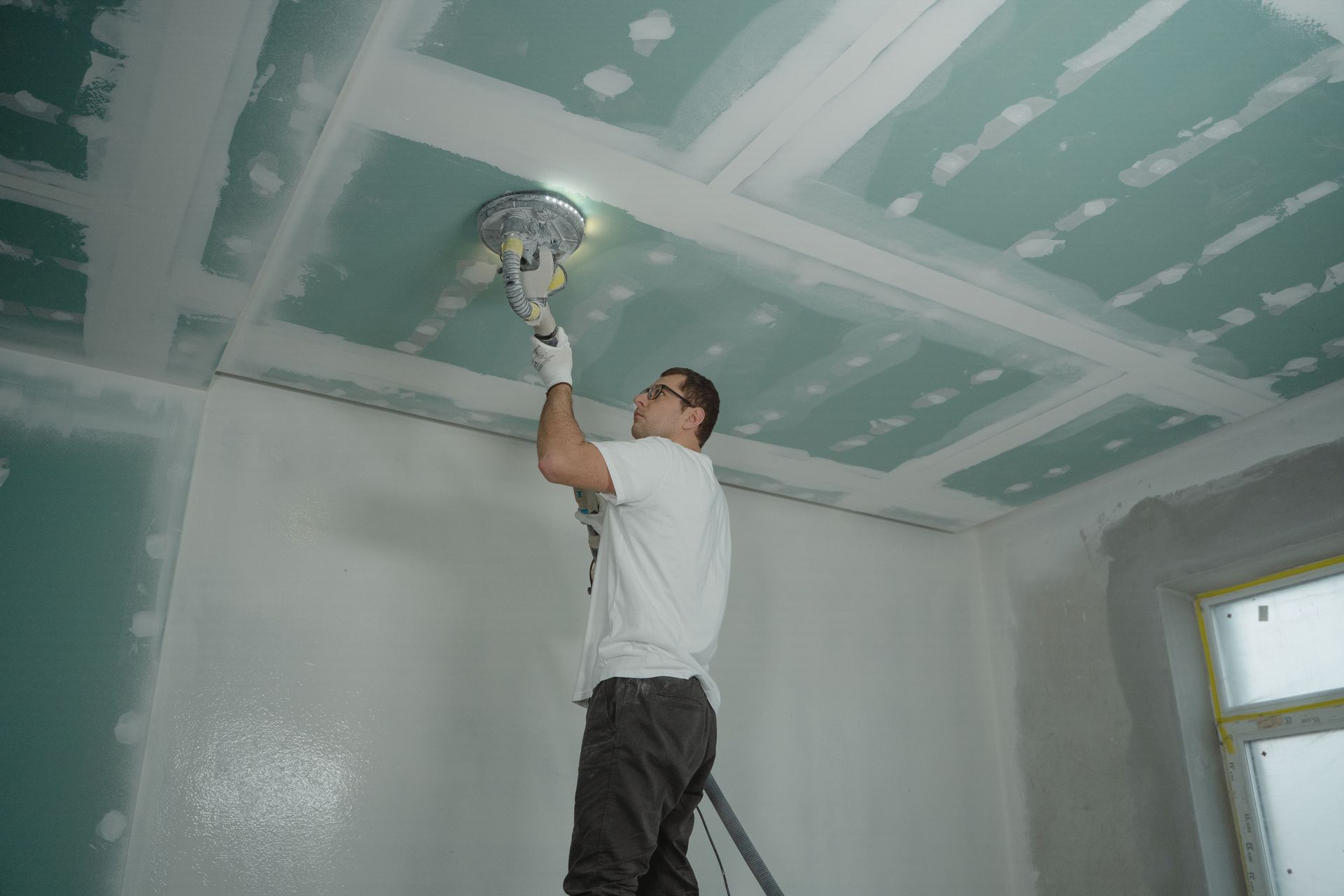
How Ceiling Repairs Address Structural Weakness
Repairing ceiling drywall means cutting damaged sections into regular shapes that accept patches cleanly, securing backing boards between joists to support patch edges, and fastening new drywall with screws spaced close enough to prevent future sagging. Joint compound is applied in progressively wider coats—first to fill the seam, then to feather edges outward so the repair becomes invisible. Texture matching requires identifying whether the existing finish is knockdown, skip trowel, or orange peel, then replicating that pattern using spray equipment or hand tools.
Once repairs are complete, ceilings appear flat and uniform without visible seams, color differences, or texture inconsistencies that reveal where work was performed. Sagging sections become rigid and level, cracks no longer reopen with seasonal temperature changes, and stained areas are sealed and textured so discoloration doesn't bleed through new paint. The repaired sections accept primer and paint uniformly, without the flashing or sheen variation that indicates incomplete surface preparation.
Ceiling repairs are cost-effective when damage is localized and the surrounding drywall remains structurally sound. Extensive sagging, widespread water damage, or repeated cracking across large areas often indicates problems beyond surface repair—inadequate framing support, active leaks, or drywall that has reached the end of its service life and requires full replacement rather than patching.
Common Questions About This Service
Ceiling drywall repair addresses visible damage while reinforcing the structure to prevent recurrence, and understanding what the work involves helps you evaluate whether repair or replacement makes sense.
What ceiling damage can be repaired instead of replaced?
Small holes, isolated cracks, minor sagging, and water stains that haven't compromised structural integrity can typically be repaired, while extensive damage across large sections or repeated moisture exposure often requires full replacement.
How do you match existing ceiling textures?
Matching involves examining the pattern depth and distribution, adjusting spray pressure or hand tool technique to replicate the profile, and blending repair edges so transitions disappear under typical room lighting.
Why do ceiling cracks reappear after repair?
Cracks reopen when the underlying cause isn't addressed—seasonal framing movement, inadequate joint tape, or fasteners that pull through weakened drywall all create stress points that crack repaired seams.
Can minor water stains be repaired without replacing drywall?
If the drywall remains firm and flat without soft spots or sagging, stains can be sealed with stain-blocking primer and retextured to match surrounding areas, eliminating discoloration without full panel replacement.
How does El Paso's dry climate affect ceiling repairs?
Low humidity causes joint compound to dry quickly, which speeds project completion but requires careful timing when applying multiple coats, and reduces the risk of mold growth in areas with past moisture exposure.
Premier Home Updates evaluates ceiling damage to determine whether localized repair or broader replacement provides the most durable solution. Schedule a property evaluation to identify specific ceiling concerns and repair options.
