
Walls Rebuilt to Eliminate Structural Failure
Drywall Replacement in El Paso for severe water damage, mold contamination, and structural issues beyond repair
Drywall reaches the point of necessary replacement when water saturation causes permanent weakness, mold growth penetrates the paper facing and gypsum core, or repeated cracking indicates framing problems that surface repairs can't resolve. Complete removal and replacement involves stripping damaged panels back to the studs, inspecting framing for rot or structural issues, installing new drywall with proper fastener spacing, and finishing surfaces to match surrounding walls. Premier Home Updates handles drywall replacement projects in El Paso homes and commercial properties where localized patching would leave weakened sections that fail again within months.
Replacement differs from repair in scope and permanence—instead of covering over compromised material, the process eliminates it entirely and rebuilds the wall system from the framing outward. This approach addresses hidden problems like mold growth behind drywall, insulation that has been compressed by moisture, and electrical or plumbing penetrations that weren't properly sealed during original construction.
Arrange an on-site consultation to assess whether your damaged walls require targeted repair or full replacement.
What Changes After Replacement Completes
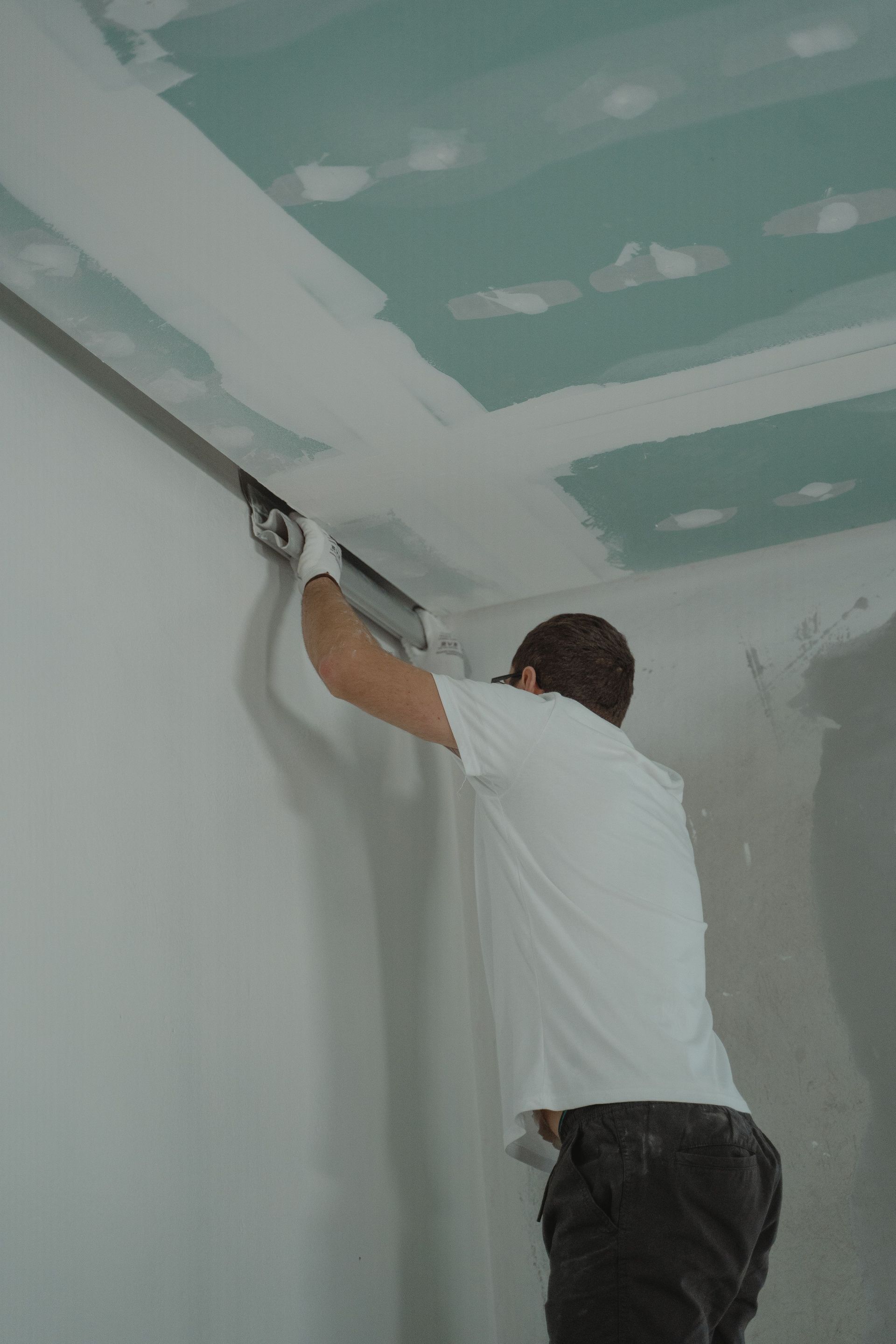
Drywall replacement involves removing baseboards and trim to access panel edges, cutting out damaged sections or stripping entire walls, and hauling debris offsite before new installation begins. New panels are measured, cut, and fastened to studs with screws placed every twelve inches on edges and sixteen inches in the field, creating a rigid surface that won't flex or sag. Joints are taped with fiberglass mesh or paper tape embedded in joint compound, then finished with progressively wider coats that feather smoothly into the surrounding surface.
After replacement, walls become structurally sound without soft spots, flexing, or areas that sound hollow when tapped. Surfaces appear smooth and uniform, ready for texture application and paint without visible seams, ridges, or depressions marking where old and new drywall meet. The work restores both the appearance and functionality of interior walls, eliminating moisture pathways, improving insulation performance, and providing a solid substrate for finishes.
Replacement also creates opportunities to upgrade insulation, relocate electrical outlets, or improve soundproofing between rooms—improvements that aren't possible with surface repairs. The process takes longer than patching because multiple coats of joint compound require drying time between applications, but the result is a wall system built to current standards rather than a compromised surface held together by successive repairs.
Answers to Frequent Service Questions
Drywall replacement is a more invasive process than repair, so understanding what the work involves and when it becomes necessary helps you plan the project timeline and budget.
When is drywall replacement necessary instead of repair?
Replacement becomes necessary when water damage causes permanent sagging or crumbling, mold penetrates the drywall core, or repeated structural movement creates cracks that reappear after multiple repair attempts.
What happens during drywall replacement?
Damaged panels are cut out and removed along with any compromised insulation, framing is inspected and repaired if needed, new drywall is installed and fastened securely, and joints are taped and finished to create smooth, seamless surfaces.
How long does drywall replacement take?
Timelines depend on the area being replaced and the number of joint compound coats required, but most single-room projects are completed within several days once demolition begins, with drying time between coats determining the overall schedule.
Can you replace drywall in just one room?
Yes, replacement can be limited to specific rooms or wall sections, with new drywall finished to match adjacent areas in texture and appearance so transitions aren't visible once painting is complete.
How does El Paso's climate affect drywall installation?
Low humidity accelerates drying times for joint compound, allowing faster completion of multi-coat finishing, while temperature stability year-round prevents the seasonal expansion and contraction that can cause fastener pops in other climates.
Premier Home Updates provides drywall replacement services that address both visible damage and underlying structural issues. Request a detailed assessment to determine whether your property requires localized repair or complete panel replacement.
